Invest Now

Uncategorized

Structural disruption drowns out market noise and expands investible universe

28 November 2025: Investing in structural disruption can help deliver portfolio diversification, overcome market unpredictability, and boost returns, according to global long-short manager System Capital.

Marking System Capital’s third anniversary, Founder and Portfolio Manager Lev Margolin, said understanding how structural shifts will reshape companies and sectors is key to outperformance, irrespective of whether markets continue to drive higher.

It is an approach that has delivered, with the System Capital strategy returning 20% p.a. (before fees) since inception*. The System Capital Long Short Fund (the Fund) also recently received a ‘Recommended’ rating by Zenith Investment Partners.

Bottom-up, fundamental analysis is crucial to identifying structural tailwinds, changing industry dynamics, and broadening the investment circle of confidence.

“To identify businesses that will be structurally stronger in five years, you must analyse their fundamentals and trajectory. This includes suppliers, customers, regulators, and social license. It’s a disciplined, repeatable process that helps keep us focused.”

This process reveals both structural winners and losers. By combining long and short positions within the same industries, investors can maximise exposure to companies driving disruption, while profiting from those falling behind.

“Our process reveals long-term winners and those at risk of disruption and changing industry dynamics. Incorporating short positions – about 20% of our portfolio – adds both protection and opportunity for investors.”

Technology, information services, media, infrastructure and industrials are all set to see strong structural changes over the coming five years.
Focusing on these sectors allows the Fund to target attractive returns, good diversification, and a durable advantage outside of the AI super cycle. It also alleviates any portfolio biases towards the US and Australian markets, with Europe offering significant structural opportunity.”

Fidante’s research revealed valuations were the primary concern for advisers. Almost 40 percent of advisers noted valuation concerns in Australian equities, while valuations overtook Trump as the primary concern in global markets (30%).
This search for alpha has driven demand for alternatives, with 77 percent of advisers allocating up to 10 percent of client assets to alternatives. Yet, liquidity concerns deterred almost 40 percent of advisers from investing in the opportunity.

“It’s a common misconception that alternatives mean sacrificing liquidity in portfolios. Absolute return strategies, like our long-short approach, provide daily liquidity allowing investors maximum flexibility.

“A focus on structural disruption can also reveal quality companies at the right price. With a long bias, we can take advantage of structural decline while using market dislocations to reinvest at attractive valuations at a time that suits us.”

“Amidst stretched valuations, persistent economic uncertainty, and deafening market noise, it’s a strategy that has allowed us to deliver consistent performance and position for the long-term.” Mr Margolin said.


Important Information
1 As at September 2025
2 As at June 2025

The results of the survey are based on responses provided by 201 financial advisers or authorised representatives of a licenced financial adviser, who completed an online survey between 23 September and 6 October 2025. These views are their own and do not represent the views of Fidante or any company within the Challenger Group

Media release issued by System Capital Pty Ltd (ABN 14 657 739 323) (System). System Capital is an Authorised Representative (No. 001309928) of Fidante Partners Limited ABN 94 002 835 592 AFSL 234668 (Fidante) and is authorised to provide financial services to wholesale clients only (within the meaning of the Corporations Act 2001 (Cth)). System is the investment manager of System Capital Long Short Fund (ARSN 683 513 948) (the Fund). The information in this Media release should be regarded as general information only and is not intended to be financial product advice. It has been prepared without taking account of any person’s objectives, financial situation or needs. You should read the Target Market Determination and Product Disclosure Statement for the Fund available at www.fidante.com before making any decision in relation to the Fund(s).

Past performance is not a reliable indicator of future performance. Source: Fidante Partners Limited ABN 94 002 835 592 AFSL 234668 (Fidante). Fidante is a member of the Challenger Limited group of companies (Challenger Group) and is the Responsible Entity and issuer of interests in the Fund(s). Other than information which is identified as sourced from Fidante in relation to the Fund, Fidante is not responsible for the information in this publication, including any statements of opinion.

Investments in the Fund are subject to investment risk, including possible delays in repayment and loss of income or principal invested. Accordingly, the performance, the repayment of capital or any particular rate of return on your investments are not guaranteed by any member of the Challenger Group.

The Zenith Investment Partners (ABN 27 103 132 672, AFS Licence 226872) (“Zenith”) rating (HOW9939AU assigned November 2025) referred to in this piece is limited to “General Advice” (s766B Corporations Act 2001) for Wholesale clients only. This advice has been prepared without taking into account the objectives, financial situation or needs of any individual, including target markets of financial products, where applicable, and is subject to change at any time without prior notice. It is not a specific recommendation to purchase, sell or hold the relevant product. Investors should seek independent financial advice before making an investment decision and should consider the appropriateness of this advice in light of their own objectives, financial situation and needs. Investors should obtain a copy of, and consider the PDS or offer document before making any decision and refer to the full Zenith Product Assessment available on the Zenith website. Past performance is not an indication of future performance. Zenith usually charges the product issuer, fund manager or related party to conduct Product Assessments. Full details regarding Zenith’s methodology, ratings definitions and regulatory compliance are available on its Product Assessments and at https://www.zenithpartners.com.au/our-solutions/investment-research/regulatory-guidelines/

Lev Margolin’s Four-Step Process for Finding Structural Winners

This content was first published on Livewire on 30 October 2025.

System Capital’s Lev Margolin reveals how he finds long-term structural winners and four stocks he expects to grow stronger.

In a market that seems to change its mind daily, it’s easy to be distracted by the next big theme. From AI to crypto to small-cap rallies, there’s always a new story commanding attention. But for Lev Margolin, founder and CIO of System Capital, the focus is far longer term.

By concentrating on businesses that will be structurally stronger in five years’ time, Margolin has built a strategy that’s delivered 22.2% per annum since its inception in 2022 – without chasing the latest fad or headline.

“What we’re trying to do is identify companies that aren’t just good businesses today, but that will be fundamentally better businesses in the future,” says Margolin. “That’s where the real alpha comes from.”

Margolin’s early experiences working at L1 Capital shaped much of his philosophy. He joined L1 in 2009 when it was still a small long-only manager working alongside co-founders Raff Lamm and Mark Landau. His 14 year tenure at L1 instilled in him the value of disciplined research and a pure focus on process.

“At L1, the alpha was always in the detail,” he recalls. “The regulatory report you read that others ignored, the extra industry analysis that built conviction – those are the insights that give you the confidence to hold a position longer or time your entry better.”

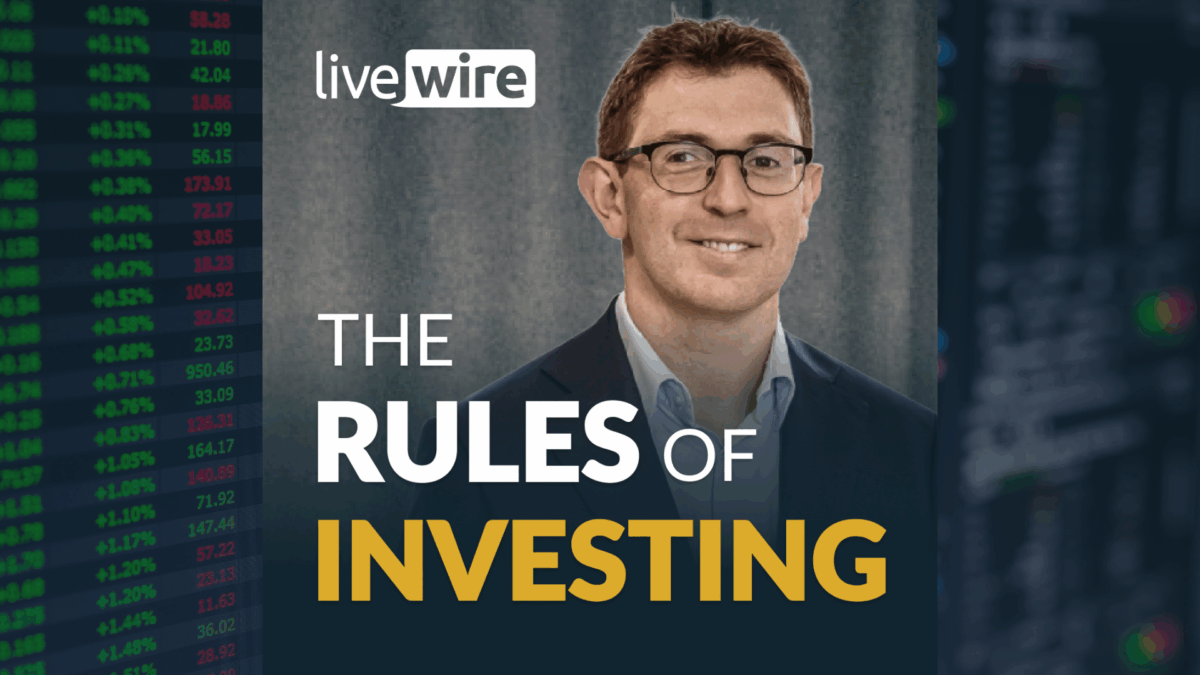
In this episode of The Rules of Investing, Margolin explains the four-step framework System Capital uses to identify structural winners, where he’s finding value in a hot market and four companies he believes will be stronger five years from now.

A framework built around one important question

System Capital’s investment framework is built around a simple but powerful question: will this business be structurally stronger in five years’ time?

Every potential investment must pass through a four-part checklist designed to assess that structural trajectory. Margolin describes it as a disciplined, repeatable process that keeps the team focused on the right attributes.

  1. Customer strength – Does the business deliver more value to its customers over time?
  2. Supplier relationships – Is it improving its position within the supply chain?
  3. Regulatory environment – Are the rules likely to stay supportive?
  4. Social licence – Will society still accept and value the business in five years?

This lens drives everything the strategy does, both long and short. On the long side, it identifies the businesses compounding structural advantages. On the short side, it helps pinpoint those at risk of structural weakening – mature companies being disrupted by new technologies or changing industry dynamics.

“If all four of those elements are improving – customers, suppliers, regulation, and social licence – then by definition your competitors are getting weaker. That’s what underwrites long-term alpha.”

Finding value in quieter parts of the market

While some investors are drawn to fast-moving themes like AI and crypto, Margolin prefers the quieter, cash-generative parts of the market where structural strength builds predictably over time. He calls it investing through a cashflow lens.

System Capital’s universe stretches across industrials, infrastructure, and technology, but every position must have two defining features: a minimum 14% internal rate of return and a clear path to being structurally stronger in five years’ time.

A good example is Ferrovial (BME: FER), the Spanish-listed toll road operator that owns assets in the US and Canada. Its concessions stretch out for decades, with limited regulatory caps on pricing. “They’re not sexy businesses,” Margolin says, “but they give us high conviction in predictable earnings and a structurally stronger asset base over time.”

That same thinking extends into what he calls digital infrastructure – technology businesses that form the backbone of the digital economy. Here, he’s looking for data-rich networks that become more valuable as they grow. Equifax (NYSE: EFX), for example, has built The Work Number, a vast employment and income database now used by banks, mortgage brokers, and US state governments. 

“Each new record makes the network stronger,” Margolin explains. “It’s a perfect example of compounding structural advantage.”

The team also seeks out what they term hidden value – businesses with strong underlying franchises but obscured potential. Schibsted (OSE: SCHA), the Nordic classifieds group, was one such investment. When System Capital first took a position, it was burdened by legacy media assets. As those were sold and the business refocused on digital classifieds, its true worth was unlocked.

In each case, the common thread is structural improvement and the ability to grow cashflows, deepen moats, and emerge stronger through time. 

Navigating a hype-driven market

In an environment dominated by artificial intelligence and speculative rallies, System Capital’s approach remains grounded. Margolin acknowledges the transformative potential of AI but warns that not every company linked to the theme will emerge a winner.

“The AI trade has spread well beyond the Mag Seven,” he observes. “You’ve now got power generators, hardware builders, software businesses being caught up in it. But underwriting those businesses on a five-year view is very difficult.”

By focusing on companies with tangible cashflows and clear pathways to structural improvement, he aims to deliver steady outperformance without chasing the froth.

“We’re not trying to call the end of the cycle,” he says. “We’re just doing what we’ve always done – working out how business ecosystems are evolving and how that flows through to cashflows.”

If there are winners, there must also be losers

Running a short book in a bull market is never easy, but Margolin insists it adds both protection and opportunity. System Capital’s short positions are typically around 20% of the portfolio, focused on companies facing structural decline and in mature industries where new technologies are eroding the economics.

One example is Europe’s traditional satellite operators, once steady cashflow generators selling bandwidth to broadcasters. “Elon Musk’s Starlink and other low-orbit constellations have completely changed the economics,” Margolin notes. “Prices for data are down 15 to 20% a year, and the old models just don’t work.”

By avoiding valuation-driven shorts and concentrating on clear fundamental deterioration, System Capital has managed to generate absolute attribution from the short book since inception – a rare feat in rising markets.

Focus on cashflows, not stories

When asked what investors often get wrong about markets today, Margolin’s answer is measured. He doesn’t believe the market is necessarily wrong, just that it’s easy to get caught up in short-term narratives.

“It’s so hard to know if it’s different this time,” he says. “That’s why we come back to first principles. We focus on cashflows, not stories.”

And if markets were to shut for five years? His pick is Cellnex (BME: CLNX), a European cell tower operator with long-term contracts and CPI-linked revenue growth.

“You don’t need to make many guesses about the world to know it’ll be a stronger cashflow generator in five years,” he says.

That sentiment captures System Capital’s philosophy: steady compounding, structural resilience, and deep, detail-driven research.


Fidante Welcomes Global Long-Short Manager

Fidante welcomes global long-short manager as its latest affiliate

Partners with System Capital as it continues to build its Alternatives offerings

3 February 2025: Global investment management firm, Fidante, part of Challenger Group, has further expanded its network of affiliate managers, today announcing a new strategic partnership with System Capital.

System Capital is a global long-short manager founded in 2022 by well-regarded Portfolio Manager, Lev Margolin. The strategy is well suited to family offices, High-Net-Worth investors, and retail clients.

Typical of Fidante’s affiliate model, Fidante has taken a substantial minority equity stake in System Capital and entered into an exclusive distribution agreement.

The System Capital Long/Short Fund is a global concentrated strategy focused on identifying pricing inefficiencies between the valuation of a business and its business quality. The Fund employs detailed, bottom-up fundamental research to identify companies with strong and growing cashflows over the medium term with a strengthening competitive position.

The Fund’s absolute return focus also means the Fund can benefit from situations where a structural position of a business is weakening and that is not yet reflected in valuation, as well as adjust the Fund’s market exposure (net long) to protect portfolio from market dislocations. The aim is to achieve consistent absolute returns and greater downside protection for investors.

The partnership will allow System Capital to scale and grow FUM, while strengthening Fidante’s multi-affiliate proposition and suite of investment choices.
Fidante now boasts 20 leading investment managers as part of its multi-affiliate model, spanning fixed income, equities, and various alternative strategies including System Capital.

Commenting on the partnership, Victor Rodriguez, Chief Executive, Funds Management at Challenger said specialist, active managers come to the fore in times of increasing market volatility and uncertainty.

“We are excited to be partnering with System Capital,” Mr Rodriguez said. “We believe Lev Margolin’s expertise in long-short investing, combined with the extensive experience of the System Capital team, presents a unique opportunity for Australian investors looking to take advantage of under and overvalued global stocks”.

“At Fidante, we strongly believe in the value of active management and the distinct advantages specialist, independent managers offer in an increasingly competitive market. We are committed to ensuring investors have access to best in class, active fund managers, across a wide and diverse range of products and capabilities” Mr Rodriguez said.

Why global long-short
Commenting on its investment strategy, Mr Margolin said System Capital is looking to deliver consistent absolute returns in a world experiencing record change and transition.

“Our Fund is not constructed with a specific investment thematic or qualitative overlay. Rather, we look to take advantage of structural winners and losers within specific industries to deliver absolute returns,” Mr Margolin said.

Since inception in October 2022, the Fund has returned 24.3% p.a. (before fees) as at December 2024.

“We see our partnership with Fidante as a natural evolution of our business,” Mr Margolin said. “It brings a new and differentiated investment strategy to the Fidante stable and allows us to grow our investor base.”

“Our business remains majority owned by our team, and we will continue to reinvest in the growth of the business.”

Fidante is a global investment management business with approximately A$100bn in FUM*. Fidante provides investors with access to best-in-class investment managers. They are one of Australia’s largest active investors, offering compelling strategies across equities, fixed income, and alternative assets, via partnerships with leading investment teams.

* As at June 2024
This material has been prepared by Fidante Partners Limited ABN 94 002 835 592 AFSL 234668 (Fidante). The information in this material is not a recommendation, offer or solicitation to buy or sell any securities or to adopt any investment strategy. The opinions expressed may change as subsequent conditions vary. Neither of Fidante nor any of its respective related bodies corporate, associates and employees, shall have any liability whatsoever (in negligence or otherwise) for any loss howsoever arising from any use of the material or otherwise in connection with the material. It is intended to provide general information only and is not intended to provide you with financial advice or take into account your objectives, financial situation or needs. Any projections are based on assumptions which we believe are reasonable but are subject to change and should not be relied upon. Past performance is not a reliable indicator of future performance. Fidante, its related bodies corporate, its directors and employees and associates of each may receive remuneration in respect of the financial services provided by Fidante.